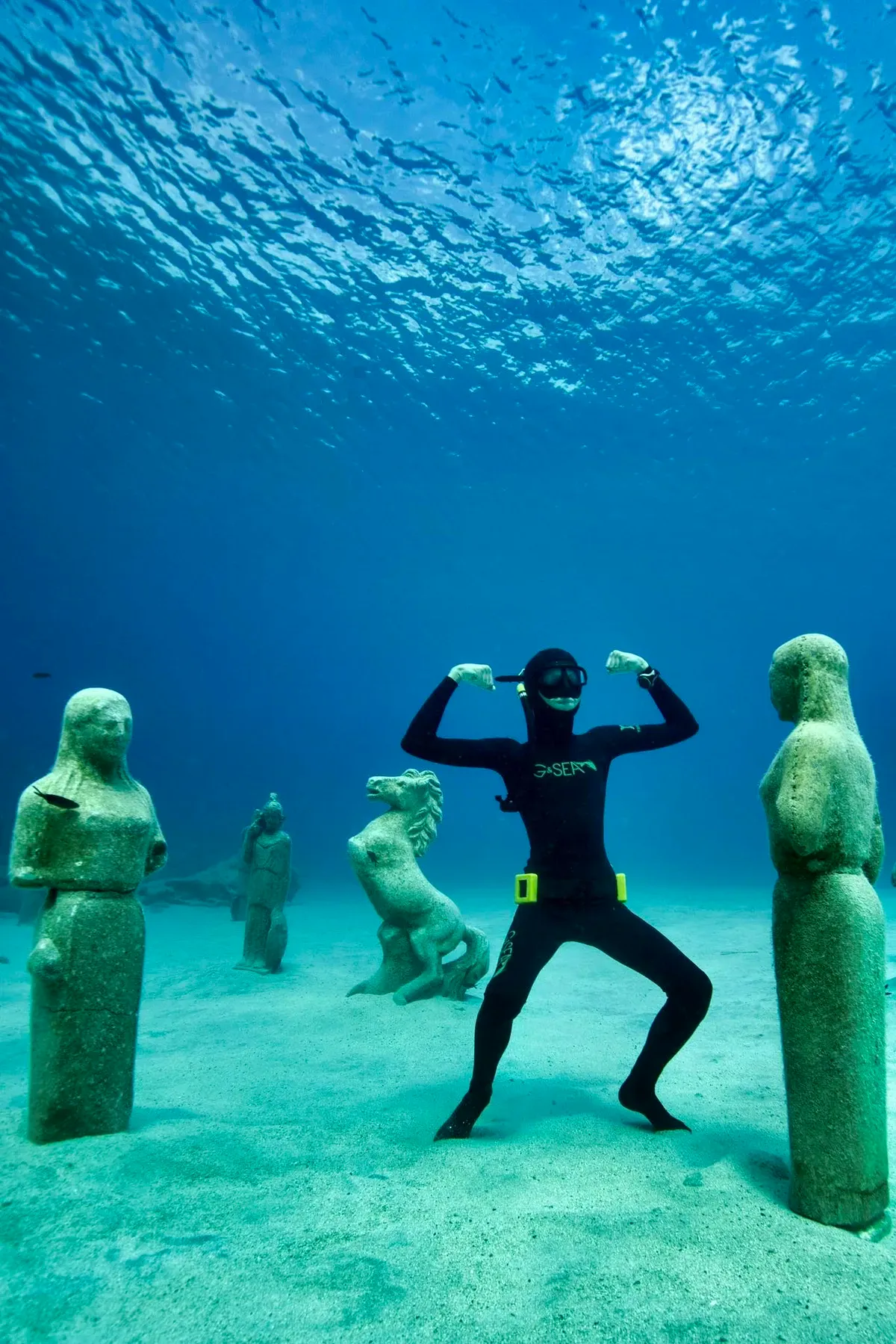
Freediving means going underwater while holding your breath, without scuba equipment. In a beginner lesson, much of the learning happens before the descent: noticing tension, getting comfortable and understanding what comes next. A calm start gives you space to enjoy learning instead of rushing through repeated dives. Our beginner guide introduces the wider activity; here, we look at the rhythm of a lesson.
First, settle into the lesson
An instructor helps you connect the parts of the experience: preparation, movement, equalisation and recovery. You might notice that your shoulders are tense, your mask distracts you or you are thinking about keeping up with someone else. Those are useful things to discuss, not failures to hide.
During preparation, breath control means relaxed, normal breathing. It does not mean repeatedly taking rapid or unusually deep breaths to “store up” air. DAN's safety guidance explains that overbreathing can suppress the urge to breathe without providing a corresponding reserve of oxygen. Even slow breathing can be excessive if the breaths are too deep.
Preparation takes the time and attention your instructor considers appropriate for you. Preparation and recovery are distinct parts of the session. Feeling peaceful is welcome; it does not establish that a dive is safe.
Then, learn the small details
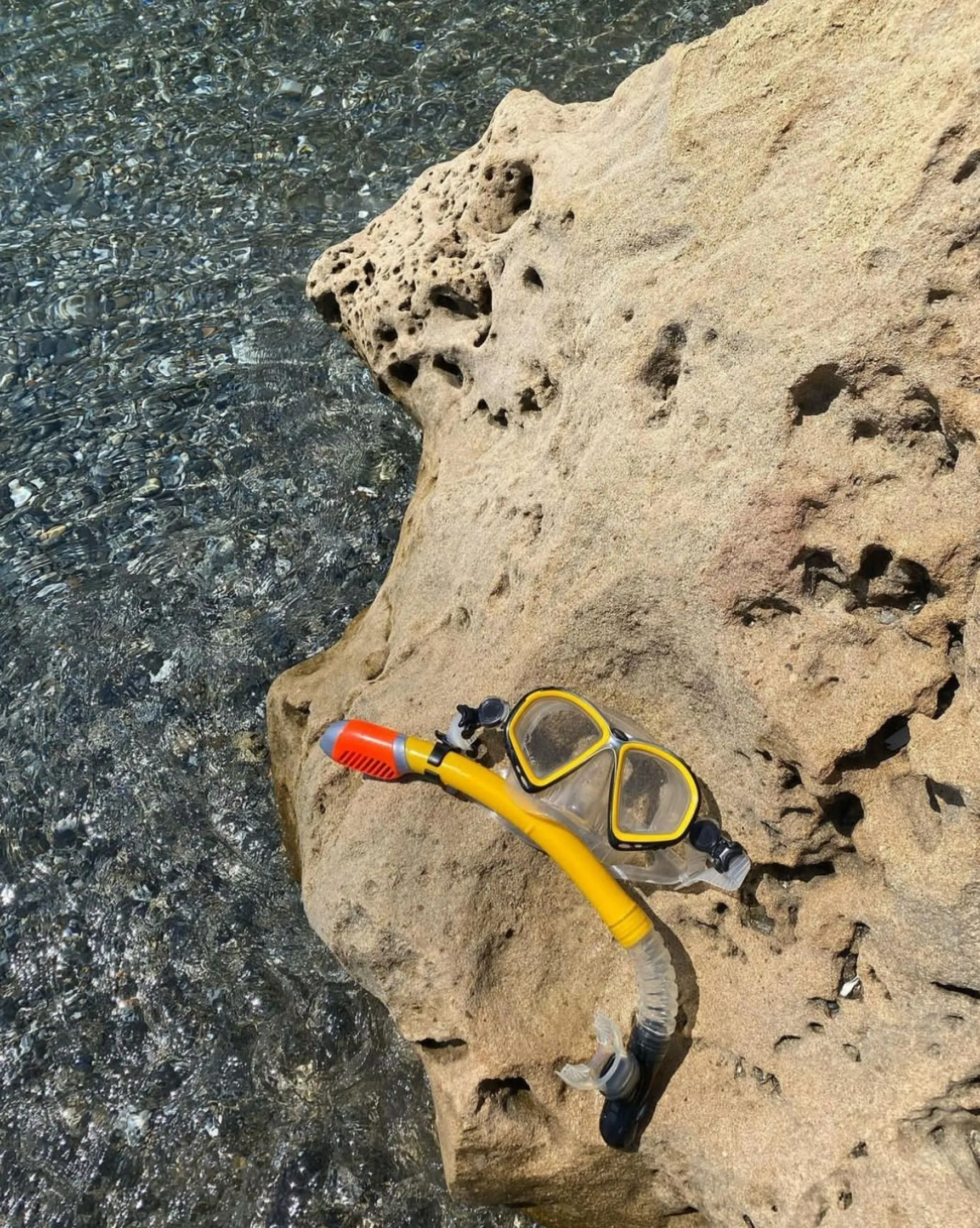
One detail may surprise a snorkeller: the snorkel comes out of your mouth before you descend on a freedive. It is one of PADI's freediver safety practices, alongside gentle, frequent equalisation and diving with a trained buddy.
Equalisation means balancing pressure in the ears as the surrounding water pressure changes. An instructor helps you check that you can do this comfortably at the surface before descending, as described in PADI's freediving education. It is something to learn early, rather than waiting for your ears to hurt.
During descent, equalisation needs to be gentle and frequent, before discomfort. Never force it or continue down through pain; if you cannot equalise, stop the descent and return to the surface with your instructor's support.
The lesson also introduces efficient movement. Instead of trying to do more dives, you can focus on understanding a correction and making the next attempt more controlled.
Understand what your body is telling you
The urge to breathe is a normal protective response, strongly influenced by rising carbon dioxide. It is not a reliable measure of how much oxygen remains. DAN explains why these signals can diverge, particularly after overbreathing.
Learning about that sensation can make freediving less mysterious. It is not permission to ignore discomfort or stay down longer. Beginners need instruction and conservative limits, not a test of how much they can tolerate.
Recovery belongs to the routine
Surfacing is followed by recovery under supervision. Your instructor teaches the recovery process and appropriate rest between dives; a brief pause or feeling ready is not a substitute. A trained freediving buddy must actively supervise, including recovery at the surface. Never practise breath-holds alone in water. These principles are central to freediving safety guidance.
If this thoughtful approach appeals, explore our introductory experiences and courses to see the options and participation requirements. Ask about learning to freedive, sharing your dates and swimming experience, and tell us what you hope to learn.